
The Hidden Skills Homeschoolers Learn Through AI Projects
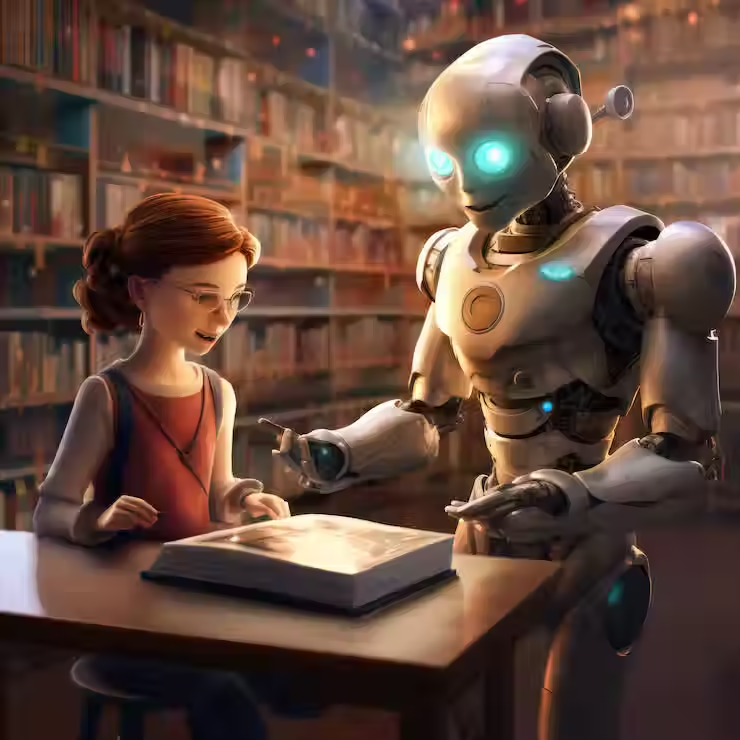
When most parents think about AI in homeschooling, they picture quick answers, math explanations, or help with writing. But the deepest benefits of AI don’t happen on the screen—they happen afterward, in the hands-on projects, challenges, and creative tasks that AI helps children plan. These AI-supported projects teach skills that matter far beyond academics: self-management, critical thinking, design thinking, iteration, creativity, and independent problem-solving. And with platforms like LittleLit giving homeschoolers structured project ideas and guided frameworks, these skills develop naturally without requiring parents to invent activities from scratch.
Project-based learning is not a “nice extra.” It’s one of the strongest ways children learn how to think, create, and persevere—all while keeping homeschooling enjoyable, hands-on, and curiosity-driven.
Key Takeaways
AI-supported projects build essential life skills such as independence, creativity, persistence, and self-management.
Hands-on challenges deepen learning far more than worksheets or passive instruction.
Parents can reduce prep time dramatically by using AI to generate ideas, outlines, and materials lists.
Design thinking and iteration flourish when children build, test, fail, and try again.
AI should guide the setup, but children must lead the doing—and that’s where real skill-building occurs.
Why Projects Are the Most Powerful Way Kids Learn With AI
Traditional assignments test whether a child can recall or repeat information. Projects test whether a child can use that information—apply it, interpret it, extend it, and problem-solve around it. That’s why project-based learning is so transformative for homeschoolers: it turns knowledge into action.
And AI makes this style of learning dramatically more accessible. Instead of parents spending hours planning experiments or creative tasks, AI can generate a ready-to-use project outline, a materials list, and step-by-step guidance in seconds. Families who use tools like AI Projects for K–12 Students find that they can integrate hands-on learning more consistently, without adding pressure or workload.
These projects become the bridge between understanding and mastery, giving kids the chance to explore ideas deeply instead of rushing through concepts.
How AI Projects Build Self-Management Skills
One of the biggest challenges in homeschooling is nurturing independence without overwhelming the child. AI-supported projects do this naturally. When a child receives a structured plan—such as “Build a simple weather instrument” or “Design your own ecosystem model”—they are responsible for moving the project forward.
They must:
organize materials
follow steps
manage time
track progress
overcome small obstacles
complete multi-stage tasks
This builds executive functioning in a way worksheets never can. Parents who use structured guidance from AI tools for homeschooling parents often see a shift: children begin taking ownership of work rather than waiting for instructions. They learn how to start, how to persist, and how to finish—three habits that shape confident learners for life.
How AI Projects Strengthen Critical Thinking
Critical thinking grows when kids must analyze results, compare outcomes to predictions, adjust methods, and ask higher-order questions. AI doesn’t do this thinking for them—it simply sets the stage.
When a project begins with a guided outline, children still have to:
interpret data
explain what happened
identify causes and effects
solve unexpected problems
reflect on what they learned
For example, if a child builds a balloon-powered car using an AI-generated plan, the real learning happens when they test it. Why did it move the way it did? How can they improve it? What variable should they change?
Tools like AI Projects for K–12 Students make the starting point clear so the child can spend more energy thinking—not guessing what to do.
Design Thinking: Teaching Kids to Invent, Not Just Complete Assignments
Design thinking combines creativity with problem-solving. It teaches kids to imagine possibilities, plan ideas, build prototypes, test them, and revise based on what they learn. This process is essential in the modern world and is naturally woven into project-based challenges.
AI prompts such as:
“Build the tallest structure you can with these materials”
“Design a new kind of animal habitat”
“Invent a simple machine using household objects”
supply the creative spark while leaving room for decision-making.
The child must:
define the purpose of the design
explore possible options
select materials
experiment with forms
adjust based on outcomes
This structured creativity becomes even more accessible when families use guided ideas from AI Projects for K–12 Students as a launchpad for open-ended exploration.
Iterative Problem-Solving: The Skill Kids Use for Life
Iteration—the ability to improve something through repeated attempts—is one of the most valuable life skills children can develop. It teaches resilience, adaptability, and scientific thinking.
AI-supported projects naturally lead kids into an iterative mindset. When a project doesn’t go as expected, children must decide whether to adjust their method, rebuild a component, change materials, or rethink the design entirely.
A child learns:
that failure is data
that improvement comes from trying again
that different approaches lead to different outcomes
that persistence matters more than immediate success
Parents often report that their children begin applying this mindset to other areas—writing, math, problem-solving, even emotional challenges. AI simply helps create more opportunities for this cycle to take place, especially when combined with structured homeschool tools like AI tools for homeschooling parents.
How Writing-Based Projects Build Communication Skills
Writing is a core life skill, and AI-supported writing projects help children express their thinking more clearly. When a child writes a story, a research summary, or instructions for an experiment, they learn how to organize ideas, revise for clarity, and communicate effectively.
The AI Writing Coach for Kids supports this process by offering structure without taking over. It can help a child brainstorm, outline, or refine their writing—all while preserving their original ideas and voice.
Writing becomes less about “getting the assignment done” and more about learning how to express thoughts in a structured, meaningful way.
Why Parents Love AI Projects: Real Learning Without the Planning Load
Project-based homeschooling can be incredibly rewarding—but it’s also time-consuming to prepare. AI dramatically reduces this workload by generating:
project ideas
material lists
step-by-step instructions
reflection questions
extension activities
Parents can finally offer consistent hands-on learning without spending hours prepping. For many homeschoolers, using structured ideas from AI Projects for K–12 Students turns project learning from an occasional activity into a sustainable weekly rhythm.


