
What Is a Good AI Tutor for Students?
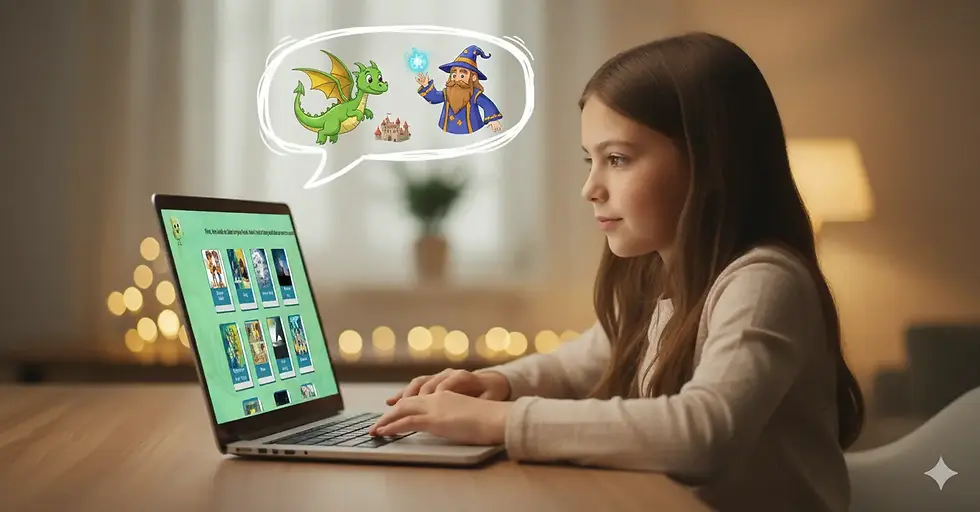
As more families and schools turn to AI for homework help, explanations, and personalized support, one question keeps coming up: “What makes a good AI tutor for students?” With so many tools available—some safe, some not designed for kids—it’s essential to understand the difference between AI that truly supports learning and AI that simply delivers answers. A good AI tutor should help students think, not replace their thinking. It should adapt to their pace, stay age-appropriate, and align with curriculum goals. Platforms built specifically for children, like LittleLit’s AI Tutor for Students, show how the right approach can elevate learning while keeping kids safe.
Below is a clear guide to what parents and educators should look for in an effective AI tutor—and how to choose one that genuinely helps students grow.
Key Takeaways
A good AI tutor should explain, guide, and scaffold—not give full answers.
Child safety, content moderation, and age appropriateness are non-negotiables.
Strong AI tutors use step-by-step reasoning, examples, and adaptive pacing.
The best AI tutors integrate with project-based learning and creativity.
Parents and teachers should choose AI tutors designed specifically for students, not general-purpose chatbots.
1. A Good AI Tutor Teaches, Not Tells
Many general AI tools instantly give answers—but this doesn’t help kids learn. A high-quality AI tutor should guide students through:
steps
reasoning
examples
explanations
corrected mistakes
hints, not shortcuts
This is what separates tutoring from answer-generation.
The AI Tutor for Students is built around these principles, using step-by-step scaffolding aligned to curriculum expectations. Students learn how to solve problems, not just what the answers are.
A good AI tutor will:
break down math problems
explain concepts in multiple ways
adjust explanations to a child’s age
offer practice questions
encourage kids to attempt first
give feedback without judgment
This builds independence—not dependency.
2. A Good AI Tutor for students Must Be Safe, Moderated, and Age-Appropriate
Not all AI tools are created with children in mind. Some allow open chat, unsafe topics, emotional advice, or inappropriate suggestions. AI tutors for students require guardrails.
A safe AI tutor should have:
strict content filtering
age-based constraints
no emotional roleplay
no unsafe topics
no harmful stereotypes
no internet browsing
teacher/parent visibility
a predictable, calm interface
This is why AI tutors designed for adults (ChatGPT, Gemini, Claude) are not appropriate substitutes for a student-facing educational AI.
LittleLit applies these standards across all tools—even creative modules—so families can rely on a safe learning environment.
3. A Strong AI Tutor Matches a Child’s Pace and Learning Level
Children learn at different speeds. They may need slower explanations in math and faster progression in reading—or vice versa. A good AI tutor adapts without pressure.
An effective AI tutor should:
gauge when a student is struggling
simplify explanations
offer alternative methods
pause when needed
check understanding
provide extra practice
never overwhelm
Tools like the AI for Homeschools platform allow parents to pair AI tutoring with flexible learning paths, so each child progresses at a pace that feels supportive and confidence-building.
Personalization is one of AI’s biggest strengths—when done safely.
4. A Good AI Tutor Should Support Writing, Not Replace It
Writing is one of the most misused areas of AI. Many general-purpose AI tools can generate full paragraphs or essays instantly—but this prevents children from developing their voice, clarity, grammar, and reasoning.
A responsible AI tutor helps kids:
brainstorm ideas
outline essays
structure paragraphs
revise drafts
learn writing techniques
improve clarity and grammar
The AI Writing Coach for Kids does exactly this. It guides writing without generating assignments for students. The student remains the author—AI is the coach.
A good AI writing tutor:
gives suggestions, not finished text
asks reflective questions
encourages revision
preserves the child’s voice
This builds authentic writing ability, not shortcuts.
5. A Good AI Tutor Encourages Hands-On Learning Through Projects
AI tutoring should never be only screen-based. The most effective AI tutors spark offline creativity by guiding students toward hands-on making, building, and experimenting.
Project-based learning helps students develop:
critical thinking
problem-solving
design thinking
perseverance
observation
testing and iteration
The AI Projects for K–12 Students collection includes:
STEM experiments
real-world challenges
engineering designs
creative arts missions
nature investigations
multi-step projects
A good AI tutor gives ideas, structure, and safety—but kids do the building.
6. A High-Quality AI Tutor Reinforces Academic Integrity
AI should never:
write essays for kids
solve full math problems without explanation
complete assignments
replace student effort
A strong AI tutor protects integrity by:
refusing to do the full work
giving process, not answers
prompting children to think
guiding them to check their understanding
reminding them of honesty and learning values
This is especially important now that many students are tempted to treat AI as a shortcut. AI tutors built for education reinforce responsibility and transparency.
7. A Good AI Tutor Helps Kids Build Confidence, Not Dependence
The goal of AI tutoring is for kids to eventually work independently—not rely on AI for everything. This means:
encouraging self-checking
celebrating effort
shifting responsibility back to the child
promoting metacognition (“Why does this work?”)
teaching kids to attempt first, ask AI next
LittleLit’s tutor is designed to foster independence by slowly reducing support as the student demonstrates understanding.
A great AI tutor gives children the tools they need to succeed—without making them reliant on technology.
8. A Good AI Tutor Fits Seamlessly Into a Parent’s Learning Routine
AI tutoring isn’t just for kids—it should also make life easier for parents and teachers. A good AI tutor for students provides:
clearer instructions
reduced prep time
instant concept explanations
customizable lessons
support for multi-age learning
visibility into student questions
easy integration with existing curriculum
This is why AI tutors built for homeschool and K–8 settings matter. The right tool should feel like a co-teacher, not a replacement.
LittleLit’s AI for Homeschools integration does exactly that by helping parents plan, track, and scaffold learning effortlessly.
Final Thoughts
A good AI tutor isn’t the one that gives the best answers. It’s the one that helps kids think better, understand more deeply, and grow more confident. The right AI tutor is:
safe
moderated
age-appropriate
curriculum-aligned
supportive
independence-building
AI tutors for students are not about replacing real teachers or parents—they’re about giving children the personalized guidance, clarity, and confidence they need to thrive.
With responsible design and thoughtful scaffolding, AI tutors become one of the most powerful learning tools available today—especially when paired with hands-on projects, writing support, and real-world learning experiences.


