How to Create a Homeschool Curriculum in 10 Minutes Using AI (Step-by-Step Guide)

Updated: Sep 15

Creating a homeschool curriculum can take hours, sometimes even days. Parents often spend more time planning lessons, organizing subjects, and tracking progress than actually teaching.
That is why more families are searching for how to use AI to create homeschool curriculum plans that save time and reduce stress. With the right AI homeschool curriculum, parents can personalize lessons, generate structured plans, adapt learning levels, and simplify daily homeschooling.
Many are also exploring AI-based platforms for kids to learn, making homeschooling more organized, flexible, and easier to manage.
In this blog, we will explore how AI can help build a personalized homeschool curriculum, create lesson plans faster, and support your child’s learning without multiple disconnected tools.
Why Creating a Homeschool Curriculum Feels So Overwhelming for Parents

Creating a homeschool curriculum often starts with good intentions, but it can quickly turn into a stressful task.
Parents have to decide what to teach, how to teach it, how often to review it, and how to track progress.
Many families want a personalized homeschool curriculum AI system because the usual planning process is time-consuming and energy-intensive.
Parents often struggle with:
Choosing the right subjects.
Matching lessons to the child’s level.
Creating daily and weekly plans.
Finding activities that keep learning interesting.
Tracking progress without extra paperwork.
This is why practical AI homeschooling tips for parents are becoming more important.
The goal is not to replace the parents’ role. It is to reduce the planning load so parents can spend more time guiding their child.
Where Most of the Time Actually Goes
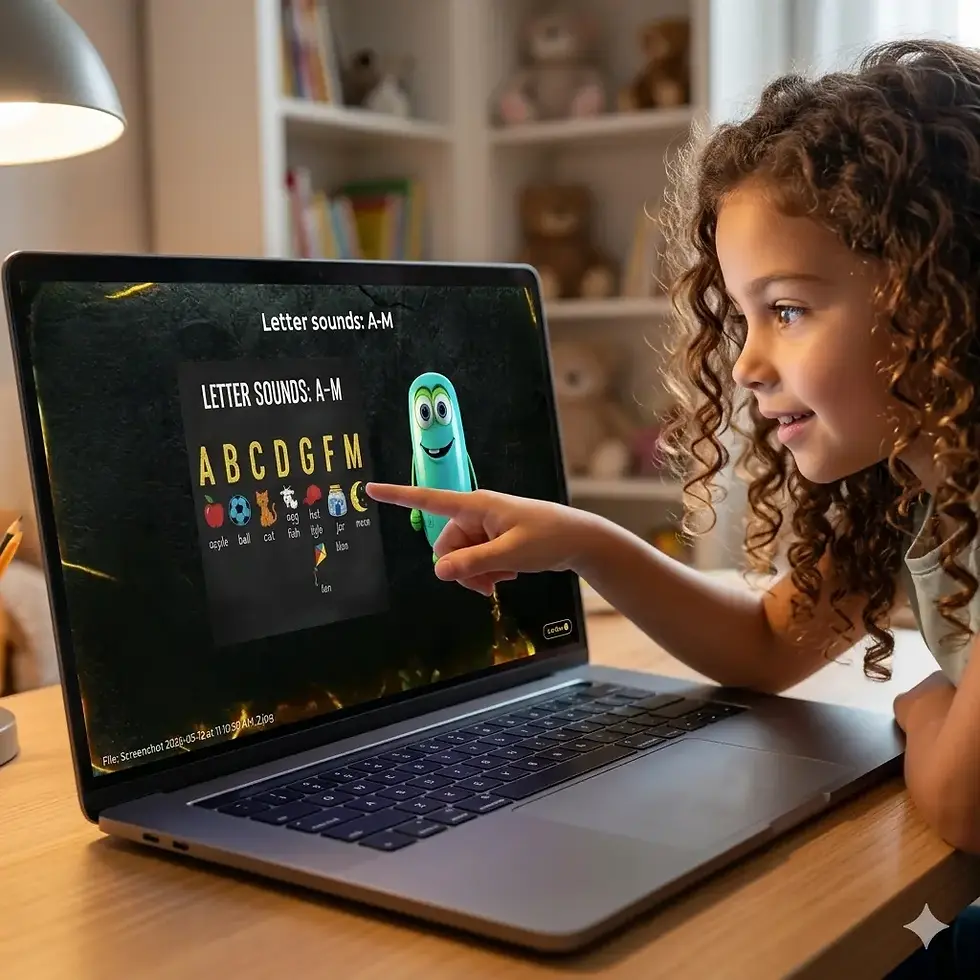
Most parents do not struggle with teaching itself. The real challenge is everything surrounding it.
A large part of homeschooling is spent managing the process instead of focusing on learning. This is why many families now look for an AI homeschool lesson planner that reduces manual work and keeps everything organized.
Here’s where most of the time usually goes:
Researching subjects and topics.
Structuring daily lesson plans.
Adjusting content for the child’s level.
Creating worksheets and activities.
Managing schedules across subjects.
Handling AI homeschool progress tracking manually through spreadsheets or notes.
Even when parents use general AI tools, they still need to organize and manage everything themselves. The planning becomes faster, but the workload often remains.
Many parents compare pricing and learning plans across different homeschool platforms pricing before choosing a system that keeps everything in one place.
That is where a structured AI homeschool system starts to make a difference.

Can AI Really Help You Create a Homeschool Curriculum Quickly?

Yes, AI can help parents create a homeschool curriculum much faster than the traditional planning process.
With the right tool, parents can move from scattered ideas to a usable plan in minutes.
Think of it this way:
What Parents Usually Do Manually | What AI Can Help With |
Choose subjects one by one. | Suggest a balanced subject plan. |
Write weekly lessons from scratch. | Create structured lesson plans faster. |
Adjust content for each child. | Personalize learning by age and level. |
Build quizzes separately. | Generate practice and review questions. |
The key is choosing the right system. Generic tools can give ideas, but a structured AI curriculum for kids can help turn those ideas into organized learning.
That is why parents searching for how to use AI to create homeschool curriculum plans often compare the best AI tools for homeschooling 2026 before choosing one.
Some families also explore what an AI-enhanced homeschool day looks like before fully switching to AI-supported learning.
What Is an AI-Powered Homeschool Curriculum (And How Is It Different)?

A traditional homeschool curriculum is usually fixed. The lessons, pace, and activities are already decided. If the child moves faster or slower, the parent has to adjust everything manually.
An AI homeschool curriculum works in a more flexible way. It can suggest lessons, adjust difficulty, create practice activities, and support learning based on the child’s progress.
The biggest difference is personalization.
A regular curriculum gives every child the same path. An adaptive AI curriculum for kids responds to each child's learning style. If a child needs more practice, it can slow down. If they understand quickly, they can move ahead.
Some families also explore AI chatbots for kids to make learning more interactive, conversational, and age-appropriate.
The goal is simple. Less manual planning for parents. More personalized learning for children.
Step 1 — Define Your Child’s Learning Profile (Age, Grade, Style, Goals)
Before using AI to build a homeschool curriculum, start with your child, not the tools.
The better the input, the better the curriculum becomes.
Think about:
Current grade level.
Strong and weak subjects.
Attention span and learning pace.
Interests and learning style.
Academic and personal goals.
This is what helps create a more personalized homeschool curriculum AI setup instead of a generic lesson plan.
For example, one child may learn better through visual activities and projects, while another prefers reading and structured practice. AI can adjust differently for both.
Parents using an adaptive AI curriculum for kids often find that learning becomes more engaging because the structure starts to match the child rather than forcing the child to match the structure.
The goal here is not perfection. It is clarity. Parents of younger children can see exactly how this applies with LittleLit's elementary homeschool curriculum - structured for Grades 1–5 with flexible pacing built in.
LittleLit AI Homeschool Plans and Pricing Options
Step 2 — Use AI to Build a Scope and Sequence for the Year
Once you understand your child’s learning profile, the next step is building a clear yearly structure.
This is where AI saves a huge amount of planning time.
Instead of manually organizing topics month by month, an AI lesson plan generator homeschool setup can help map subjects across the year in minutes.
A simple yearly structure usually includes:
Core subjects for each term.
Weekly learning goals.
Skill progression by level.
Revision and assessment periods.
Many parents struggle because they plan too much at once. AI simplifies this by breaking learning into smaller, manageable steps.
Families using an AI homeschool curriculum often build flexible yearly plans that can still adjust when the child’s pace changes during the year.
This creates structure without making homeschooling feel rigid or overwhelming. For high school families planning a full-year scope, LittleLit's high school homeschool curriculum covers Grades 9–12 with standards-aligned structure.
Step 3 — Generate Subject-Wise Lesson Plans with AI (Math, Science, English, More)
After building the yearly structure, AI can help generate lesson plans for individual subjects much faster.
This is where many parents start using an AI homeschool lesson planner to reduce daily preparation time.
Instead of writing everything manually, AI can help create:
Math practice activities.
Reading and writing exercises.
Science projects and explanations.
Social studies discussions.
Weekly assignments and review tasks.
Parents can also adjust lessons based on:
Grade level.
Learning pace.
Interests.
Difficulty level.
For writing lessons, parents can also use an AI writing coach for kids to support grammar, structure, creativity, and confidence.
Some families use separate tools for each subject. Others prefer systems that bring everything together in one place to avoid constantly switching between platforms.
The goal is not to automate parenting. It is to remove repetitive planning work so teaching becomes easier and more focused.
Step 4 — Let AI Adapt the Curriculum to Your Child’s Pace and Progress
One of the biggest advantages of an AI-powered homeschool system is flexibility.
Children do not learn at the same speed. Some move quickly through one subject and need extra support in another. A fixed curriculum cannot easily adjust to that.
An adaptive AI curriculum for kids adjusts based on how the child learns.
For example:
If a child struggles with a concept, AI can suggest extra practice.
If they understand quickly, lessons can move forward faster.
If attention drops, activities can be shortened or made more interactive.
When children need extra help, an AI tutor and homework helper for kids can give guided support without parents having to reteach every concept.
This also makes AI-based homeschool progress tracking easier because learning patterns become visible over time rather than relying solely on manual notes.
Parents using structured AI systems often spend less time correcting and reorganizing lessons because the curriculum adjusts automatically in the background.
That creates a learning experience that feels more natural and less frustrating for both the parent and the child.
Step 5 — Use AI to Create Quizzes, Worksheets, and Assessments Automatically
Creating assessments manually can become repetitive very quickly. Parents often spend hours preparing worksheets, review questions, and quizzes for different subjects.
This is where an AI quiz generator homeschool setup becomes useful.
AI can help create:
Practice worksheets.
Subject quizzes.
Revision questions.
Writing prompts.
Skill-based activities.
The biggest advantage is speed. Instead of searching for separate resources every week, parents can generate activities based on the exact topic their child is learning.
Some AI systems also automatically adjust difficulty levels, which keeps assessments more closely aligned with the child’s progress.
Families comparing AI homeschool tools often look for systems that combine lesson planning, assessments, and tracking in a single platform rather than requiring multiple platforms.
The simpler the workflow becomes, the easier homeschooling feels day to day.
Step 6 — Track Progress and Fill Learning Gaps Using AI Reports
One of the hardest parts of homeschooling is knowing whether your child is truly progressing or simply completing tasks.
This is where AI homeschool progress tracking becomes valuable.
Instead of relying on spreadsheets, notes, or manual reviews, AI systems can help parents see:
Which subjects are improving?
Where the child is struggling.
Which skills need more practice?
How learning patterns change over time.
This makes it easier to adjust lessons before small gaps become bigger problems.
Some platforms also support different learning needs through features designed for AI support for ESL students and diverse learning needs, helping parents personalize learning more effectively.
The goal is not constant monitoring. It has enough visibility to guide learning with confidence.
AI vs Manual Curriculum Building: Time, Cost, and Quality Compared

Building a homeschool curriculum manually gives parents full control, but it also requires significant time and ongoing effort.
AI changes that process by reducing repetitive planning and helping parents organize learning faster.
Here’s where the difference becomes noticeable:
Manual planning takes hours every week.
AI can generate structured lessons within minutes.
Traditional setups often require multiple tools.
AI systems can combine planning, tracking, and assessments together.
Manual curriculum building may still work well for parents who enjoy detailed planning. But many families now prefer AI-supported systems because they simplify the daily workload.
The biggest advantage is not speed alone. It is consistency.
When the structure, lesson planning, assessments, and tracking work together, homeschooling becomes easier to manage over time.
Best AI Tools for Homeschool Curriculum Building in 2026

The best AI tools for homeschooling in 2026 are those that do more than just generate content. Parents need tools that help with planning, lesson structure, assessments, progress tracking, and personalization.
Some families start with free tools because they are easy to test. These can help with ideas, outlines, worksheets, and basic lesson plans. But they often require parents to organize everything manually.
Paid homeschool-focused platforms usually offer more structure. They may include subject coverage, adaptive learning, built-in tracking, and child-safe learning environments.
When comparing tools, parents should ask:
Does it create a complete curriculum or only lesson ideas?
Can it adapt to my child’s level?
Does it track progress clearly?
Is it safe and age-appropriate?
Will I still need multiple tools?
Many parents compare options before deciding. Some review the LittleLit AI vs Power Homeschool comparison or the LittleLit AI vs MiaAcademy comparison to understand how AI-supported homeschooling differs from traditional online programs.
Others look at the LittleLit AI vs Time4Learning homeschool comparison, the LittleLit AI vs Khanmigo comparison, or the LittleLit AI for kids vs ChatGPT guide when choosing between homeschool platforms and general AI tools.
The right choice is not always the tool with the most features. It is the one that makes daily homeschooling easier to run.
Common Mistakes Parents Make When Using AI for Curriculum (And How to Avoid Them)

AI can simplify homeschooling, but only when it is used with the right structure. Many parents start out excited, then feel frustrated because the system remains difficult to manage.
Here are some of the most common mistakes.
1. Using Too Many Tools at Once
Some parents use one tool for lesson planning, another for worksheets, and another for tracking progress.
This usually creates:
More switching between platforms.
More manual organization.
More confusion over time.
A simpler system is often easier to sustain.
2. Depending Only on AI Output
AI can generate lessons quickly, but parents still need to guide learning, review quality, and make decisions based on the child’s needs.
The goal is support, not complete automation.
3. Ignoring the Child’s Learning Style
A curriculum may look perfect on paper and still not work well for the child.
Strong AI homeschooling tips for parents usually focus on adjusting pace, structure, and activities based on how the child actually learns.
4. Focusing Only on Academics
Some setups become too focused on worksheets and assignments.
Children also need:
Creativity.
Discussion.
Projects.
Real-world learning.
That balance keeps homeschooling more engaging and sustainable.
Creative tools like AI art generators for kids can add visual projects, design activities, and creative expression to the curriculum.
5. Trying to Build Everything from Scratch
This is one of the biggest mistakes.
Parents often spend hours editing prompts, organizing lessons, and manually rebuilding structures. Over time, the planning becomes exhausting.
That is why many families prefer homeschool-focused systems instead of piecing everything together themselves.
How LittleLit AI Helps You Build a Complete Homeschool Curriculum Instantly

Many AI tools can generate ideas. Few are designed to support the full homeschool experience from planning to progress tracking.
This is where the LittleLit AI homeschool curriculum works differently. Instead of relying on multiple disconnected tools, parents get a structured system built specifically for children and homeschooling.
1. Ready-to-Use Curriculum Without Manual Planning
LittleLit AI provides:
Structured learning paths.
Age-appropriate lessons.
Balanced subject coverage.
Parents do not need to build everything from scratch every week.
2. Personalized Learning That Adapts Automatically
The system adjusts based on:
Learning pace.
Skill level.
Strengths and gaps.
This creates a more personalized AI experience for homeschool curriculum without constant manual adjustments.
3. Built-In Progress Tracking
One of the hardest parts of homeschooling is knowing whether learning is actually improving.
LittleLit AI simplifies AI homeschool progress tracking by showing:
Learning gaps.
Subject performance.
Skill growth over time.
Without spreadsheets or manual tracking systems.
4. Complete Coverage in One Place
Instead of managing separate tools for reading, writing, and assessments, parents can manage everything within one system.
Many families also look for curriculum aligned with standards, such as the California K–12 curriculum standards, when building long-term homeschool plans.
5. Designed Specifically for Children
Unlike generic AI systems, LittleLit AI focuses on safe and age-appropriate learning.
Families also explore AI-powered creativity tools to make learning more interactive and engaging for kids.
Families can also include AI projects for K–12 students to help children apply concepts through hands-on, future-ready activities.
From Hours of Planning to Just 10 Minutes

Traditional homeschool planning often takes hours every week. Parents search for resources, organize lessons, create worksheets, and track progress separately.
AI changes that workflow completely.
Instead of building everything manually, parents can create a structured AI homeschool curriculum in minutes and spend more time focusing on teaching and guidance.
Here’s what usually changes:
Traditional Planning | AI-Powered Planning |
Manual lesson planning. | Faster lesson generation. |
Multiple disconnected tools. | One connected system. |
Separate worksheets and quizzes. | Built-in activities and assessments. |
Manual tracking and notes. | Automated progress tracking. |
High parent workload. | Reduced planning effort. |
This is why many families searching for ways to use AI to create homeschool curriculum systems are moving toward AI-supported homeschooling rather than managing everything manually.
Why More Parents Are Switching to LittleLit AI
Parents are no longer looking for AI tools that only generate content. They want systems that simplify homeschooling and make daily learning easier to manage.
That shift is why more families are choosing the LittleLit AI homeschool curriculum instead of relying on multiple disconnected platforms.
Many parents also explore free AI resources for K–12 schools and homeschool families before deciding which system best fits their child.
What families usually want is simple:
Less planning.
More structure.
Clear progress tracking.
Learning that adapts to the child.
One system instead of many tools.
Parents often start with general AI tools, but over time, they realize the biggest challenge isn't generating lessons. It is managing the entire homeschool process consistently.
That is where homeschool-focused AI systems stand out.
Instead of spending hours manually organizing everything, parents can focus more on guiding, teaching, and supporting their child’s learning journey.

Final Thought: You Don’t Need to Build Everything from Scratch
AI has changed how families approach homeschooling. What once required hours of planning, organizing, and manual tracking can now be simplified through structured AI systems.
The biggest advantage is not just speed. It is reducing the daily workload while keeping learning personalized and consistent.
Parents searching for how to use AI to create homeschool curriculum systems are no longer looking only for lesson ideas. They want something that helps them manage the entire learning process more effectively.
The right AI homeschool system should:
Save planning time.
Adapt to the child’s pace.
Keep learning organized.
Reduce stress for parents.
If your current setup feels scattered or difficult to manage, it may be time to simplify. You can explore how LittleLit AI works and try it for a more structured, stress-free approach to homeschooling.
FAQs
Q1.Can AI create a homeschool curriculum for my child?
Yes. AI can help create a structured homeschool curriculum based on your child’s age, grade level, learning pace, and academic goals. Many parents now use an AI homeschool curriculum to reduce planning time and personalize learning more effectively.
Q2.What is the difference between a traditional and an AI homeschool curriculum?
A traditional curriculum usually follows a fixed structure for every child. An AI-powered curriculum can adjust lessons, pace, and activities based on the child’s progress and learning style.
Q3.How do I identify my child’s learning style for the AI curriculum?
Start by observing how your child learns best. Some children prefer visual learning, while others learn through reading, discussion, or hands-on activities. A strong personalized homeschool curriculum AI setup should adapt to those differences.
Q4.Can AI create lesson plans for every subject?
Yes. Many AI systems can generate lesson plans for Math, English, Science, Social Studies, writing, and more. Some tools also automatically create activities, projects, and review exercises.
Q5.Can AI generate tests and worksheets for homeschooling?
Yes. An AI quiz generator homeschool tool can create quizzes, worksheets, revision questions, and practice activities based on specific topics or skill levels.
Q6.How do AI tools track my child’s progress in homeschooling?
Most systems use AI homeschool progress tracking to monitor learning patterns, skill development, subject performance, and areas where additional support may be needed.
Q7.Is an AI curriculum better than buying a boxed curriculum?
It depends on the family’s needs. Boxed curriculum programs offer a fixed structure, while AI systems provide more flexibility, personalization, and adaptive learning support.
Q8.How is LittleLit AI different from using ChatGPT to build a curriculum?
ChatGPT can generate ideas and lesson content, but parents still need to organize and manage everything manually. The LittleLit AI homeschool curriculum is designed specifically for children and homeschooling, with built-in structure, progress tracking, and personalized learning support.